


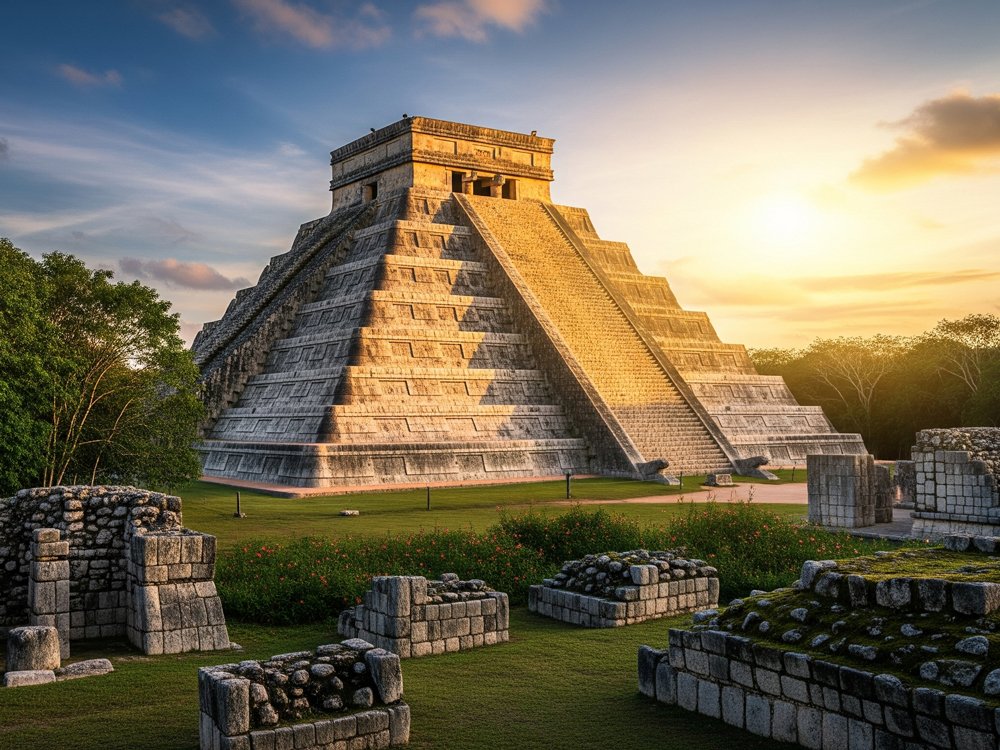
Chichen Itza Pyramid Construction: A Monumental Achievement!
We extend our sincerest gratitude to all the incredible volunteers who dedicated their time, effort, and passion to construct our scaled-down Chichen Itza pyramid! Your commitment made this ambitious project a reality, and the results are truly breathtaking.
The Journey
A couple of years ago, I began to envision a monument that would commemorate our roots and be recognized by everyone. The idea had been brewing, but the opportunity hadn’t materialized. If you look at the logo I designed for the Raíces festival, you’ll see the pyramid already integrated because I was convinced this would eventually become a reality.
In 2024, I met Marco Antonio Gutierrez, the owner of GR Carpenter LLC who volunteered to help with the Raíces festival. During discussions about creating a stage set, we started talking about the pyramid. He offered to help build it, which was a crucial piece of the puzzle since I had no idea how to construct it.
I began researching the pyramid’s dimensions and angles to ensure our replica was as close as possible to the original Chichen Itza pyramid. I presented my findings to Marco, who then started working on how to build it using wood. After a few trials, he found a way to make it sturdy yet lightweight, a critical factor since it would need to be assembled for each festival and stored afterward.
At first, finding sponsors was discouraging. Time was slipping away, and we were close to giving up. But then, hope arrived.
Sherwin-Williams was the first to step forward, generously donating 15 gallons of paint. Soon after, Coomer joined in by donating 60 2×4 studs. Still, the biggest challenge remained: plywood. During one of our committee meetings, Jenny Moreno heard about our struggle and, without hesitation, offered to have her company, Tornado Roofing, cover the cost. With that final piece in place, the dream finally had the materials it needed to begin.
With the materials secured, time was short. We contacted several people for volunteers, and Victor Garcia from Tornado Roofing, Leobardo de la Cruz, and my father Rafael Figueroa Meraz offered to help. With a team of volunteers, we could finally begin. We are grateful to the City of Frankfort and the Parks Department for allowing us to use the storage room at Prairie Creek Park, and to Christy, Emily, and Brandon for taking time off their weekends to ensure we had access to the storage room.
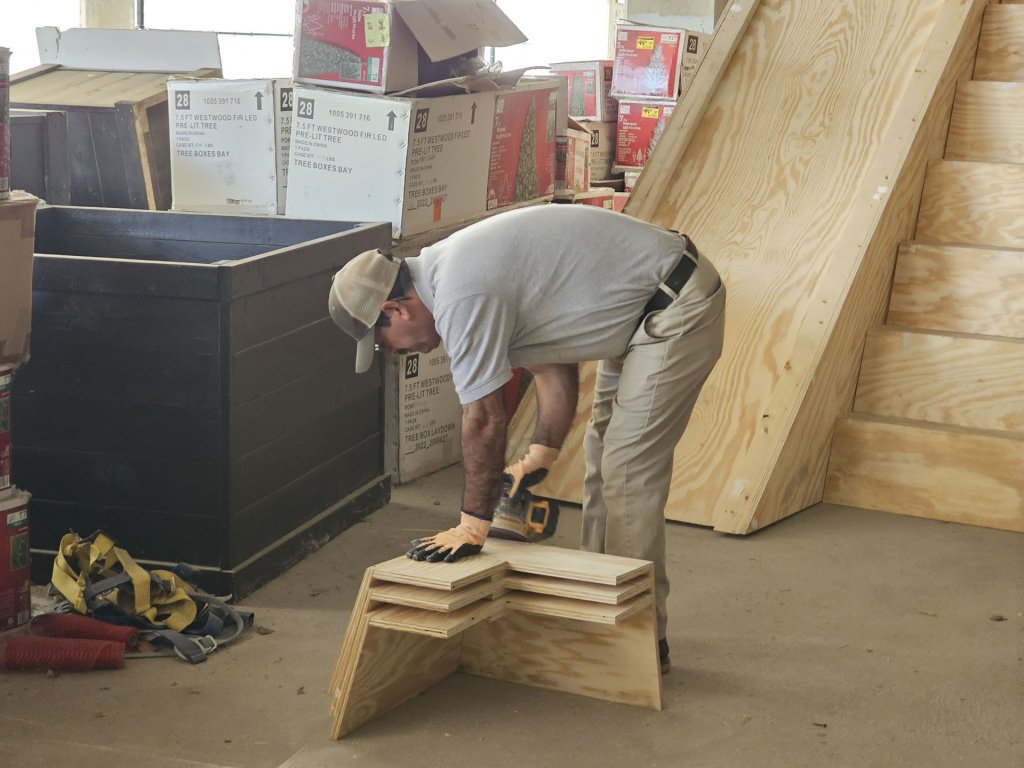
The work began on a Sunday. Marco, my father Rafael., Victor, Leobardo, and I met and started construction based on a sample Marco had made at home. Victor arrived with a truckload of plywood donated by Tornado Roofing, and I had all the 2×4 studs donated by Coomer’s in my trailer. With funds from the Raíces Festival, we purchased the necessary nails and screws, and Marco and my father provided the tools necessary to get the job done.
After we unloaded the plywood we started measuring and realized the plywood was 8 feet long, but we needed 10 feet. We had already unloaded all the plywood sheets by hand, leading us to question whether to reload and replace the wood or change the design. Originally, the pyramid was planned to be 10 feet tall, not including the temple. After this realization, we opted to rescale all measurements, and thankfully, computers made this much easier. We managed to scale down all measurements to fit the new height. This hiccup turned out to be a blessing because after making the first set of stairs, we realized the storage room was only about 8 feet high, meaning a 10-foot pyramid wouldn’t have fit!
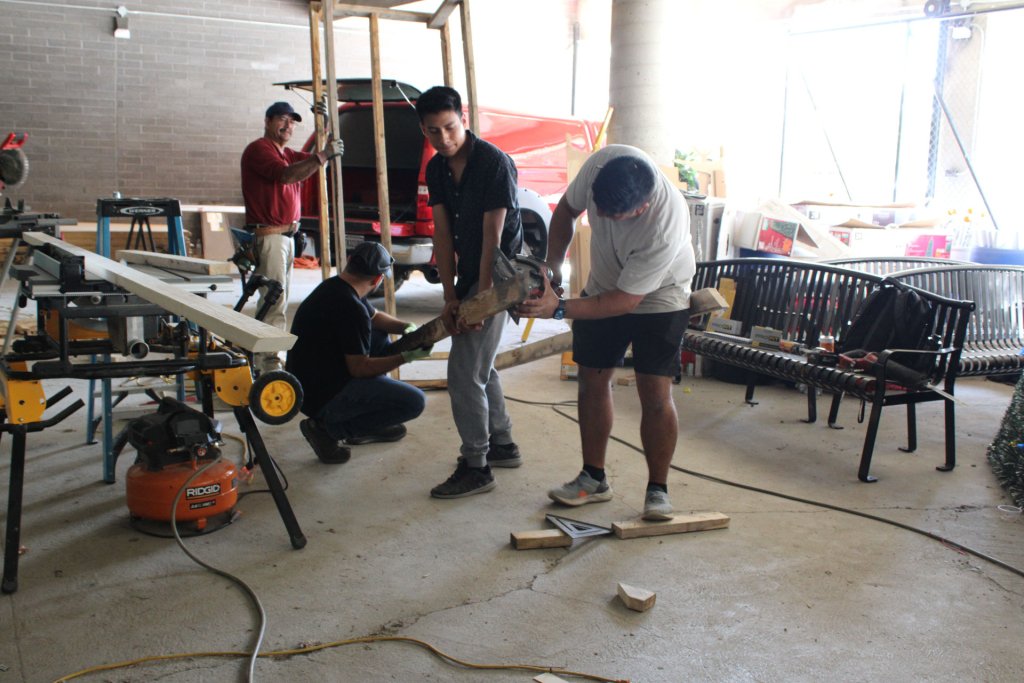
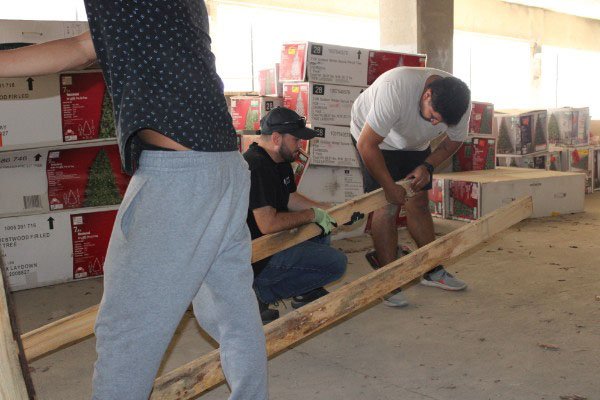
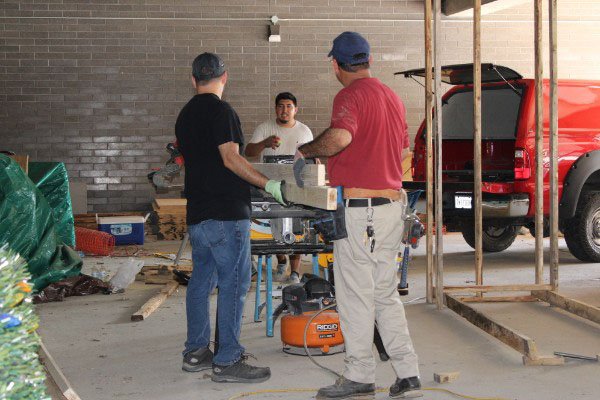
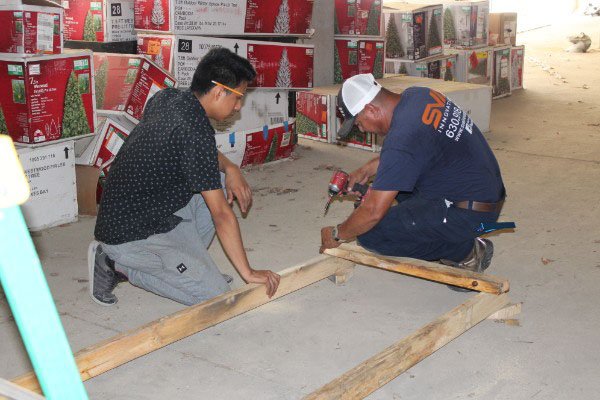
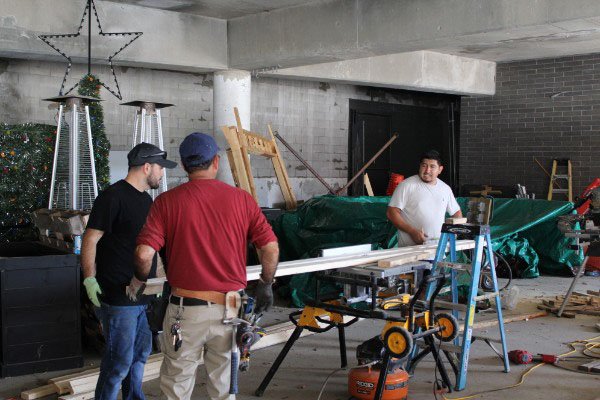
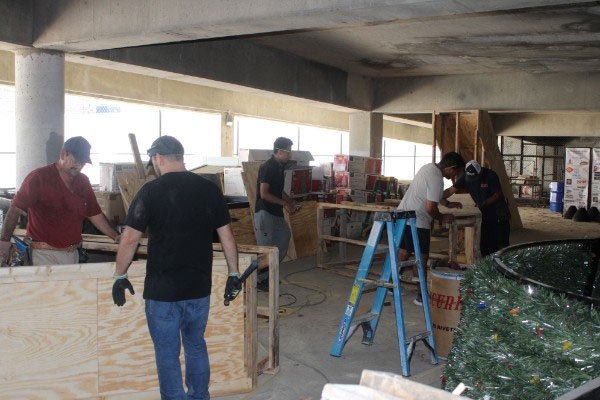
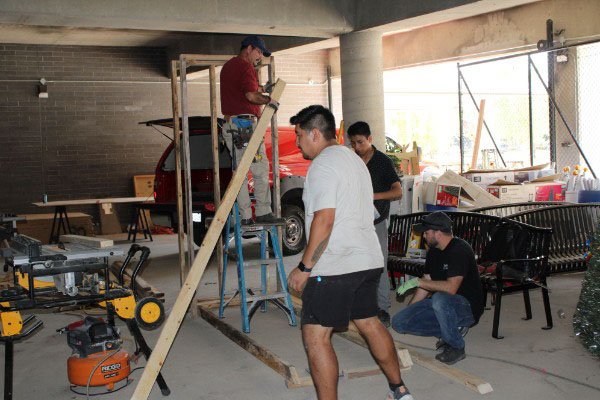
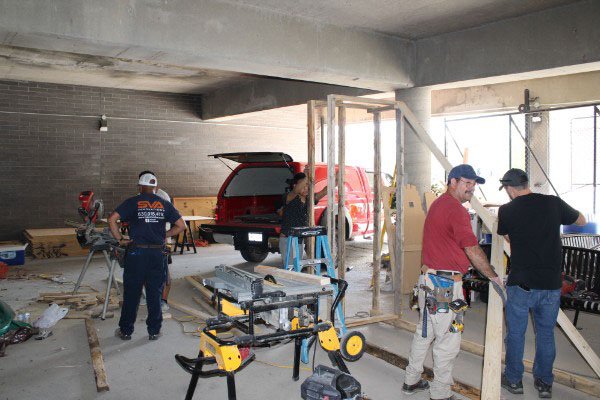
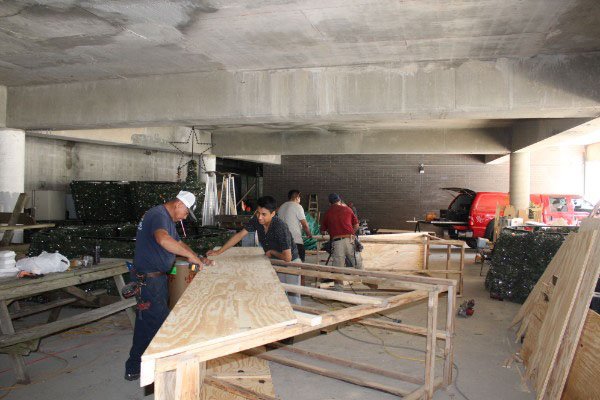
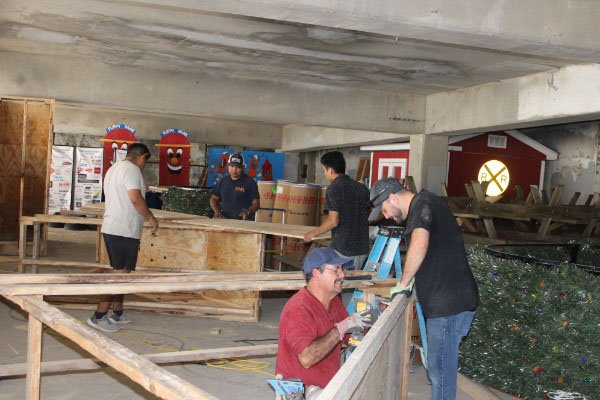
This project was a challenge because we initially thought it would be a simple build, assuming the steps were 90-degree angles. However, after careful analysis and reviewing 3D renderings and photos of the pyramid, we discovered the pyramid steps are actually at a close to 17-degree incline, transforming the entire project from easy to very complex. Again, thanks to technology and a little creativity, we managed to find all the necessary measurements and angles. With the measurements in hand, it was Marco’s turn to translate them into wood.
After hours of work, Karina stopped by, took the pictures you see above and offered to pick up food for us. She returned with Pizzabirrias from La Mixteca, a local restaurant well-known for its queso birrias. To our delight, La Mixteca heard about our project and donated the food for all the volunteers. Late that night, we managed to complete three sets of stairs and started on the fourth.
On the second day, Marco, Victor, Leobardo, my father Rafael, and I met after work. We completed the fourth set of stairs and began working on the larger steps, figuring out how to translate the design into reality. This part was the hardest, with many variables to consider, especially the 17-degree angle. We devised a workable design and started building the first sample.
On the third evening, my father and I met to pre-cut all the necessary wood for the steps. We managed to prepare enough wood for about seven steps but couldn’t finish because we ran out of plywood; the amount we requested ended up being short.
On the fourth night, Marco, Leobardo, Rafael Sr., and I met. We built most of the steps. While the team worked with the materials we had, I went to purchase two more sheets of plywood. We cut them to size and put together the last step… or so we thought. At the point of celebration, I started counting the steps and only counted 32 when there should have been 36. Everyone double-checked the count and confirmed we were indeed short on steps on all four sides. So, I hurried, took Marco’s truck, and went to the hardware store, purchasing another set of plywood sheets about 10 minutes before the store closed. That day, after a few hiccups, we finally built all 36 steps. Marco bought us food, and after our meal, eager to see how it would look, we assembled one set of steps.
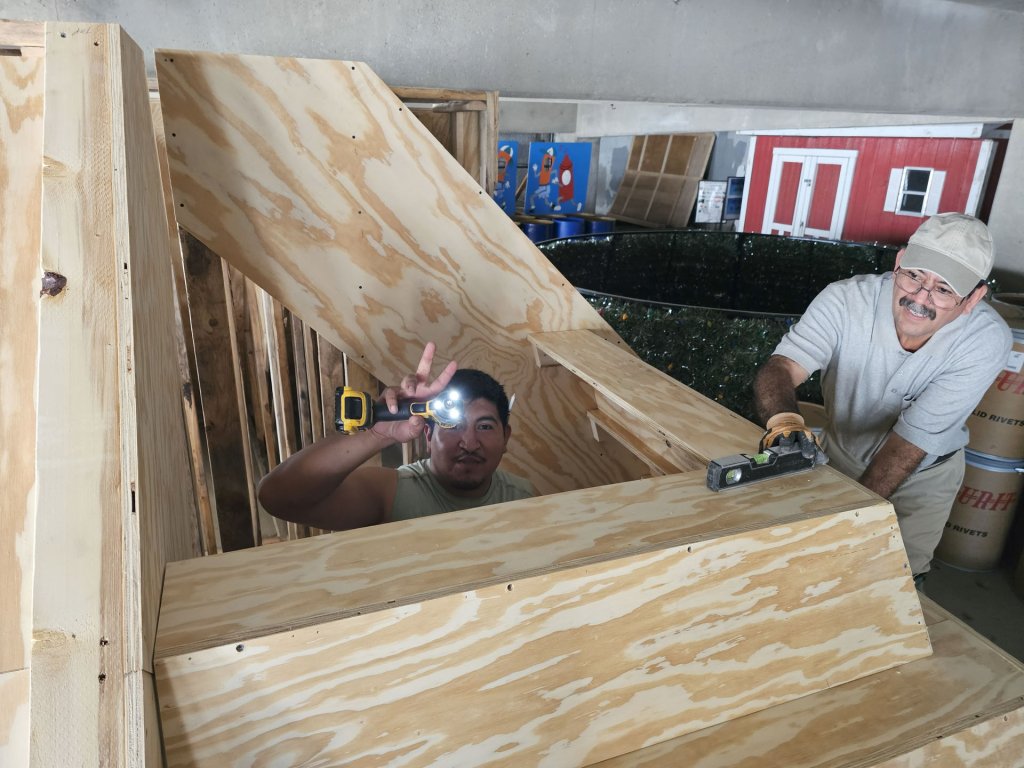
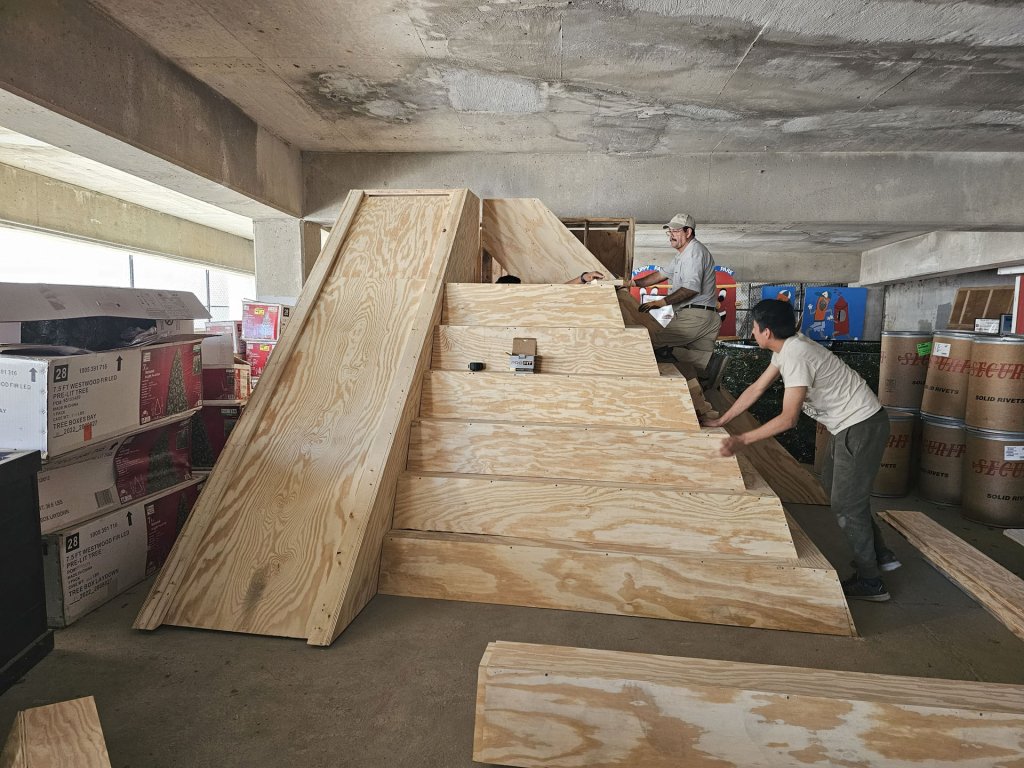
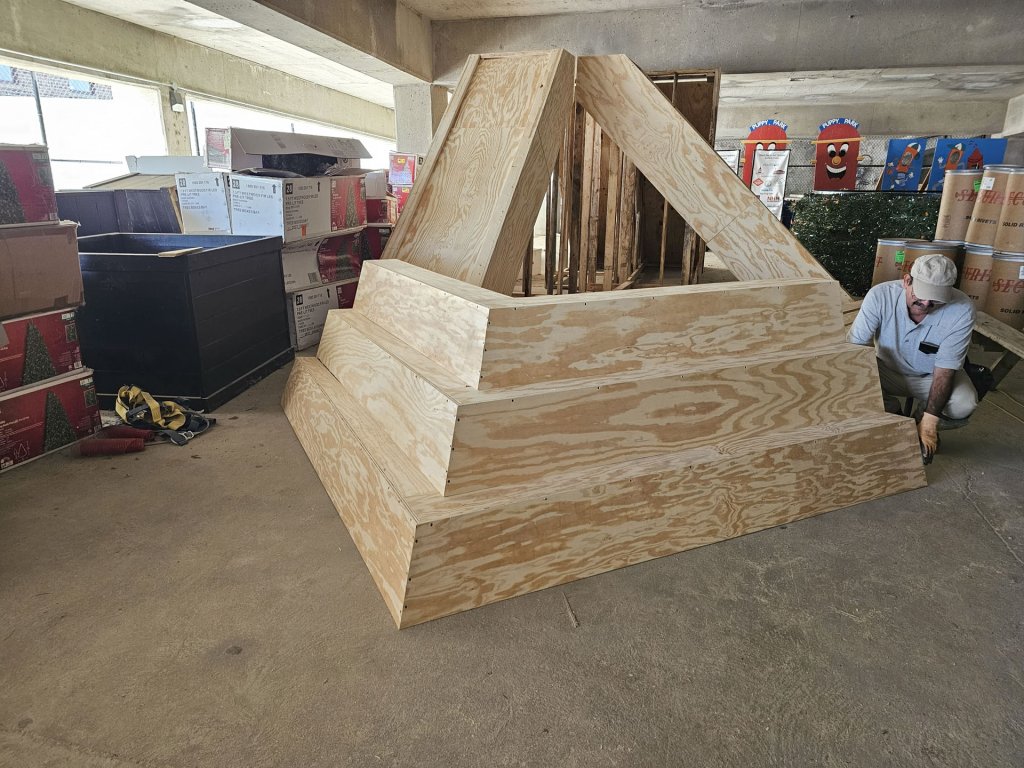
That’s when we realized a major problem: the steps were 4 inches larger than the stairs. This was again due to the complexity of the 17-degree angle and likely my error when scaling down the design for the second time. Nevertheless, we went home that night with a sinking feeling, our minds racing to figure out how we missed this and how to fix it. We considered simply trimming down the last step as a quick and easy fix, but it would make the steps look different. At this point, being only 14 days from the festival, we seriously considered it.
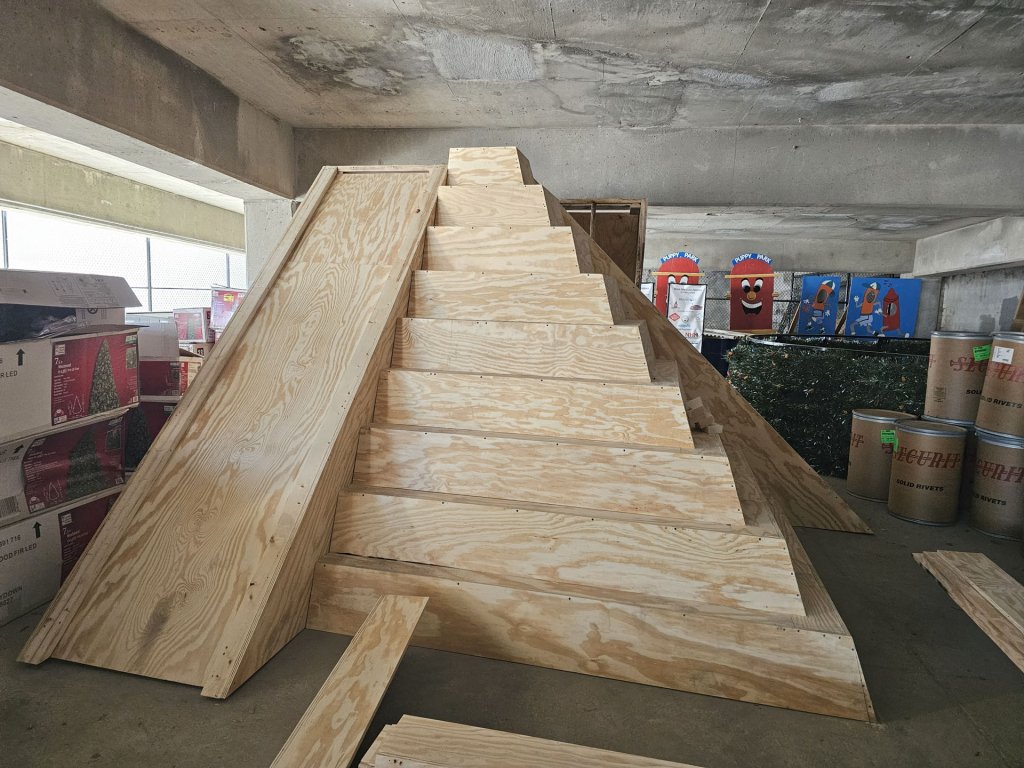
The next day, my father suggested that we had come this far and if we were going to do this, we were going to do it right. This meant trimming every step to maintain the correct proportions and stay true to the designs, which would take us about four hours, but it was the right thing to do. When we started trimming the first step, we realized that the two of us couldn’t do it alone; it was hard to hold a fully assembled step and try to run it through the saw. So, I reached out to Hugo Mendieta, who had offered his help. I called him, and he came to our rescue. Between the three of us, it took about four hours to trim all the steps. Afterward, I invited them to a meal to celebrate our successful fix.
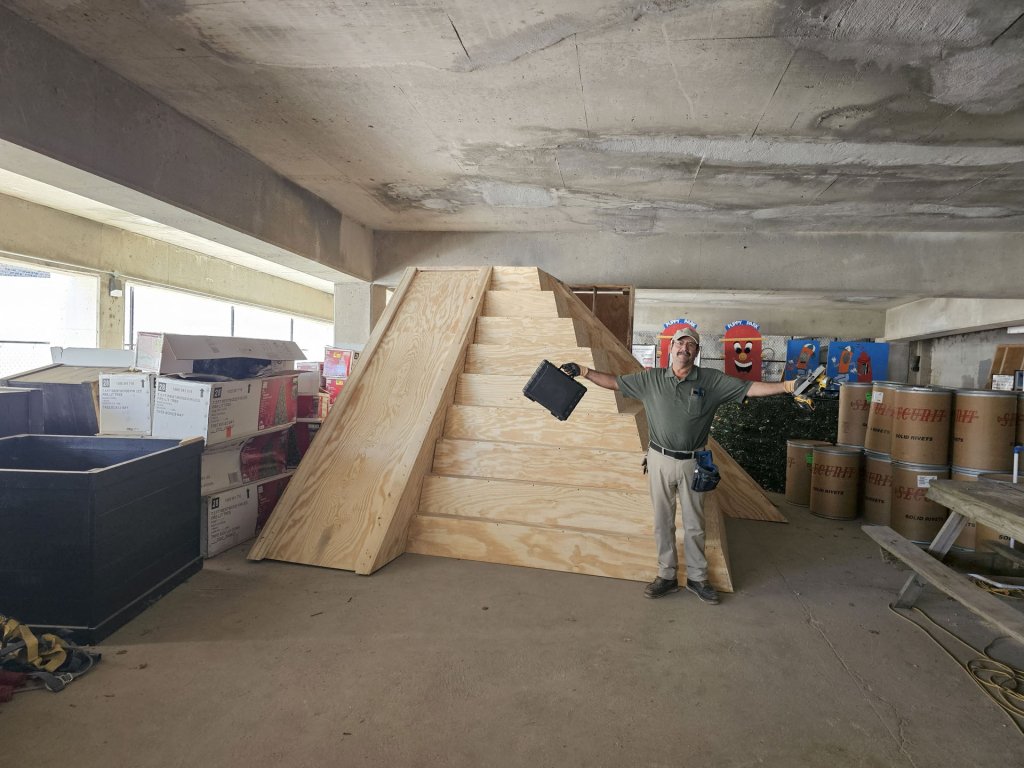
At this point, the pyramid was completed except for the temple, which Marco offered to build at home.
The Stars Align
While we were working on the pyramid, someone else was painting the mural at Prairie Creek Park. I met the artist, Ricardo Cortez, by chance because my vehicle was in his way. I asked him to let me know if he needed me to move it. We started talking about his mural, and I told him what we were doing. He came over to look at it and, to our surprise, offered to paint it for free. Being less than two weeks away, I doubted this was possible. We had just planned to paint a solid color this year due to lack of time. Things happen for a reason, and people are in the right place at the right time when you least expect it.
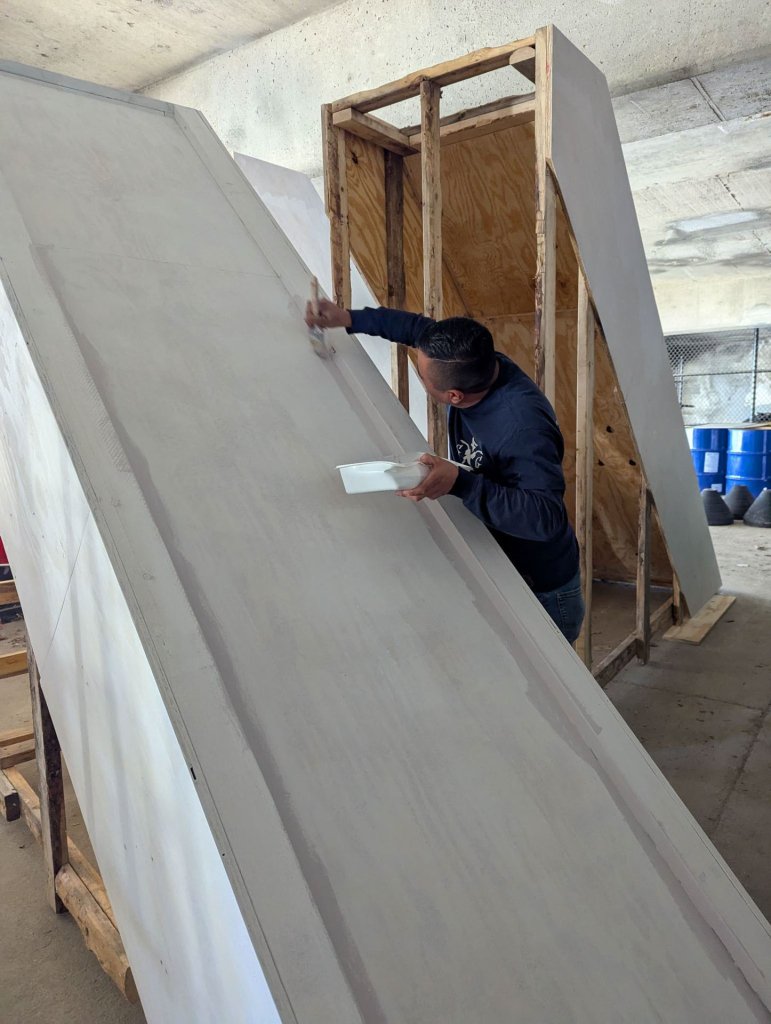
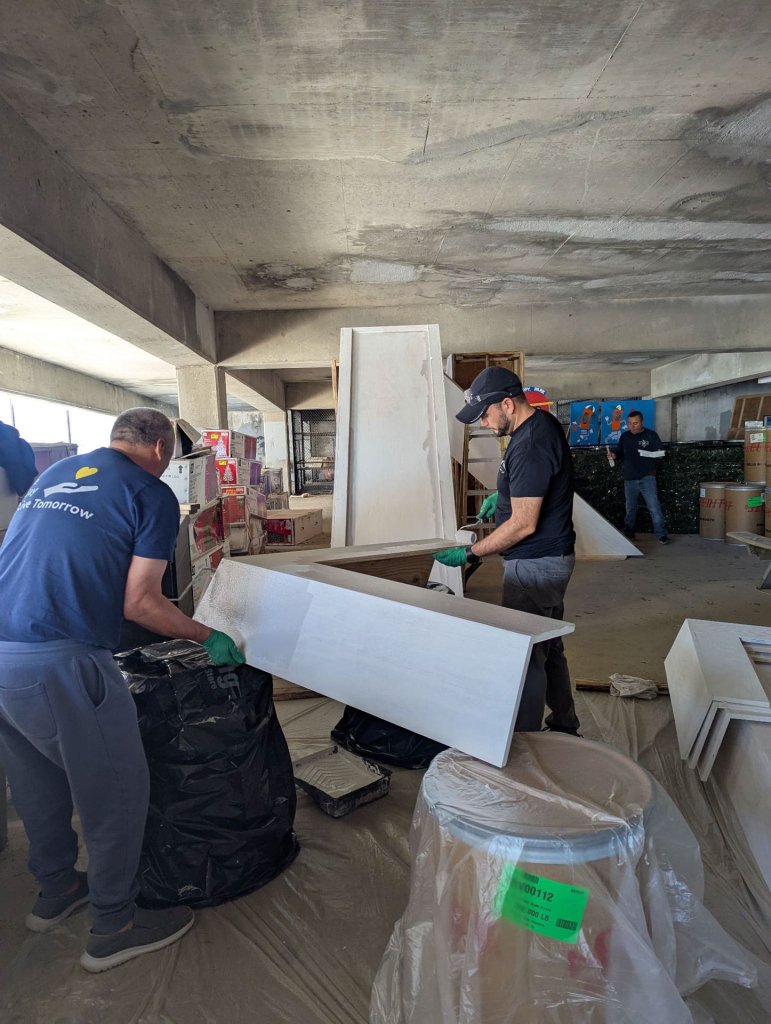
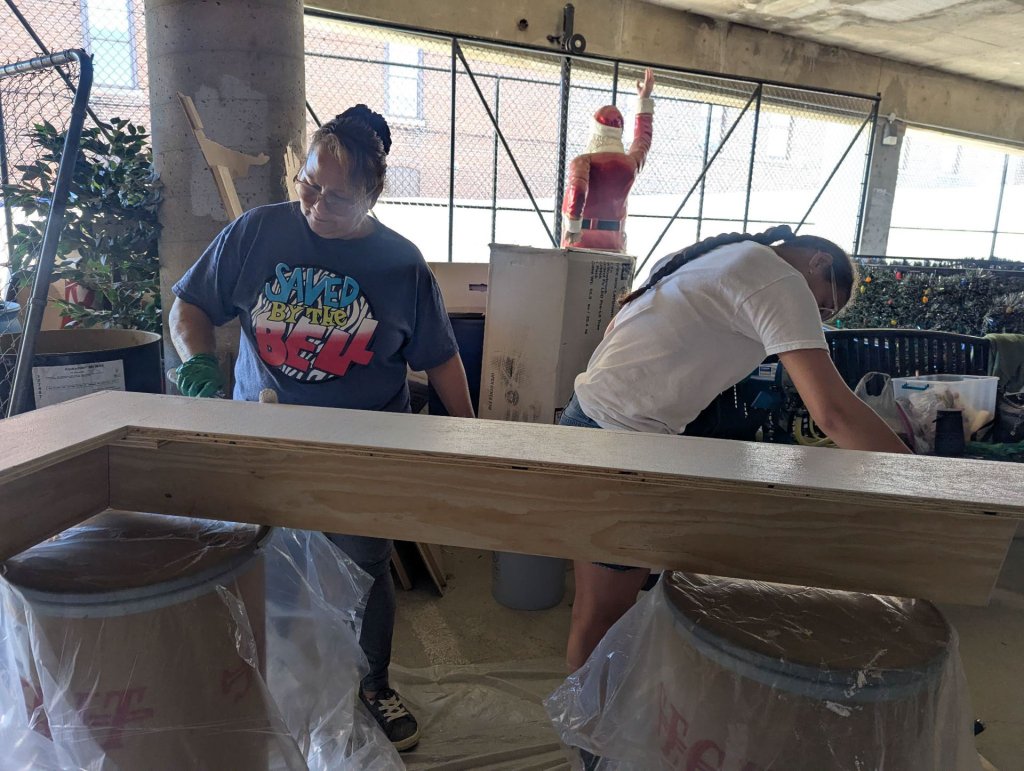
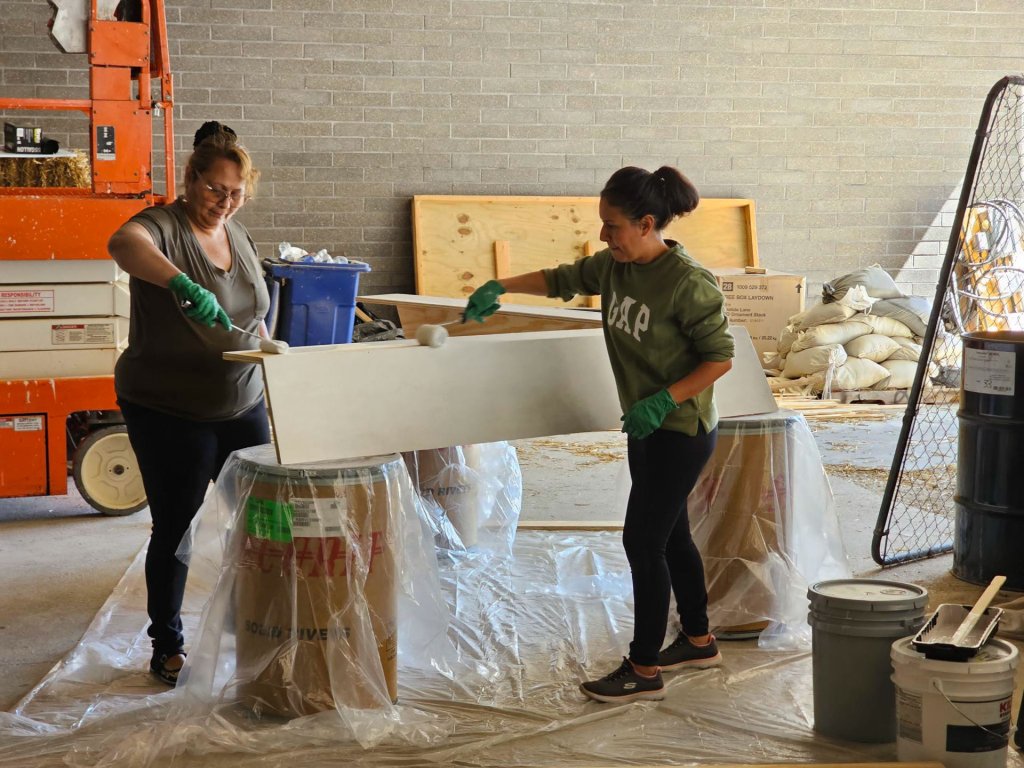
With a week left before the festival, I met with Ricardo, and he chose the colors he needed for the job. I went to Sherwin Williams to have the 15 gallons of paint they donated mixed into the colors we needed. With the paint ready and less than seven days remaining before the festival, the pressure was on. My dad suggested we help Ricardo paint the primer and do the first coat of paint.
Then, my family offered to help. My parents, Rafael and Angeles, my wife Esmeralda, and I spent about five hours priming the entire pyramid.
The next day, my wife Esmeralda asked her father, Jose Cruz, and her uncle, Hugo Mendieta, for help. They joined my mother Angeles, my sister Giselle, my wife Esmeralda, and me to paint the base coat. Between the six of us, it took about three hours to paint the base coat and prepare it for Ricardo to work his magic.
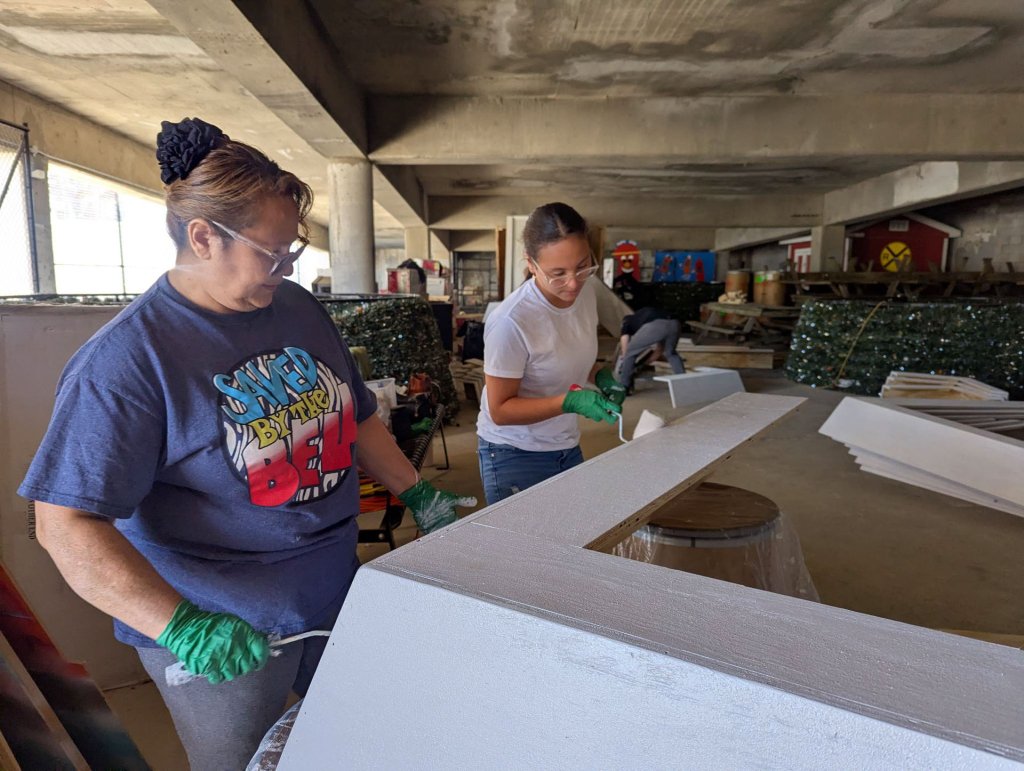
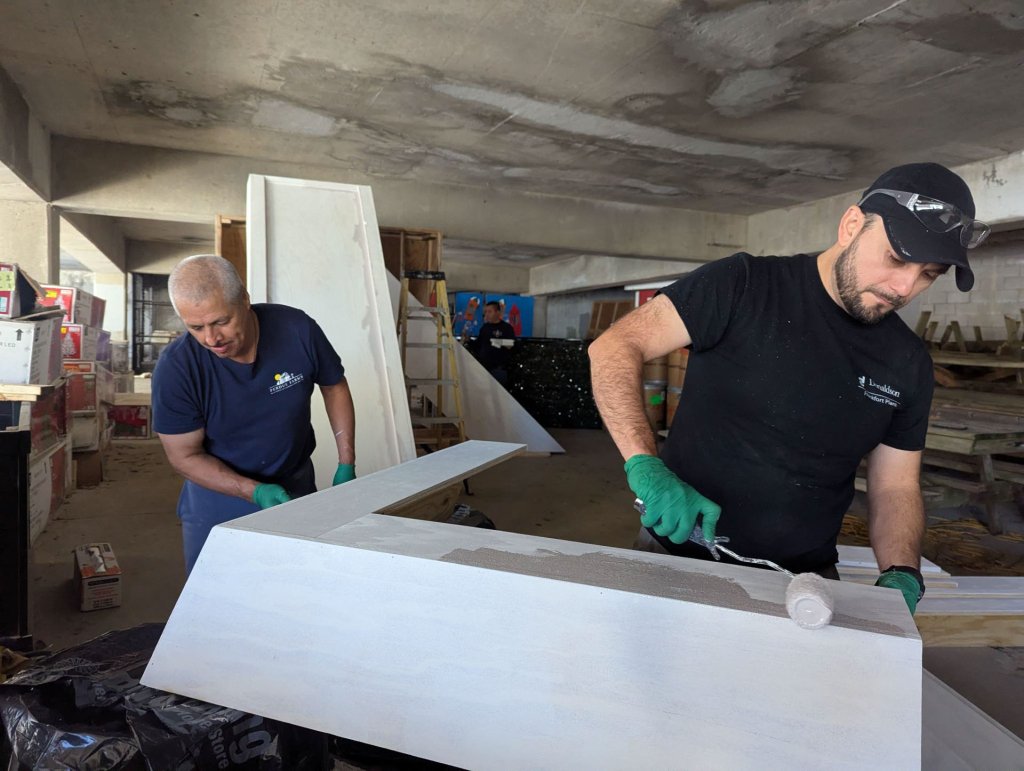
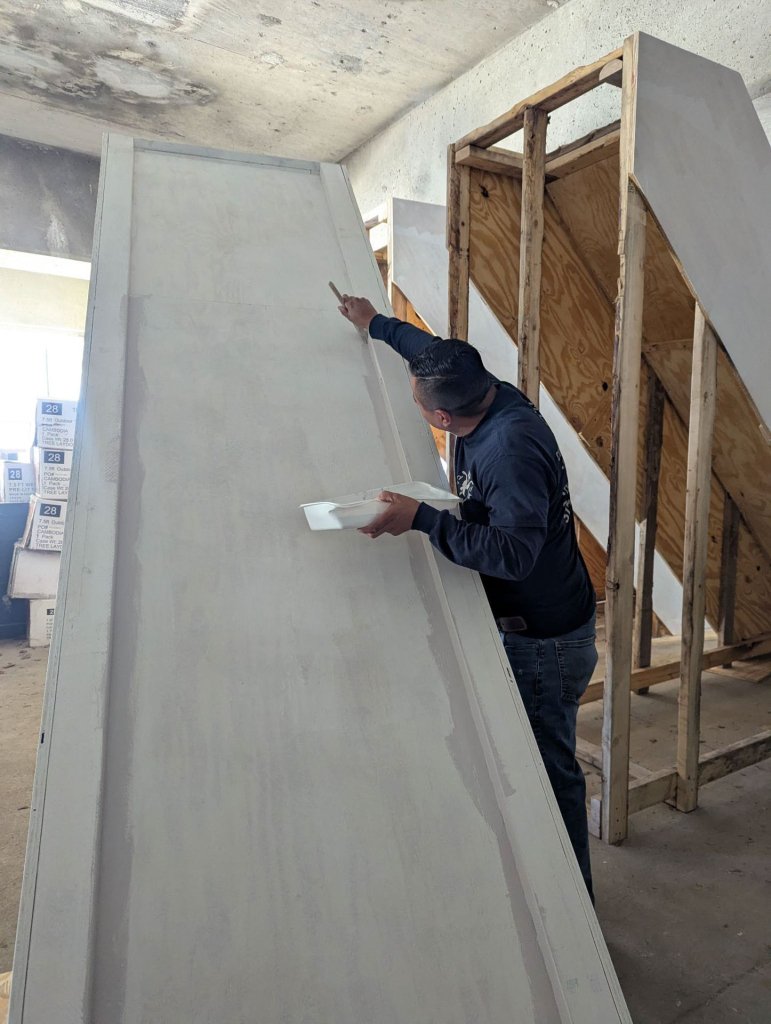
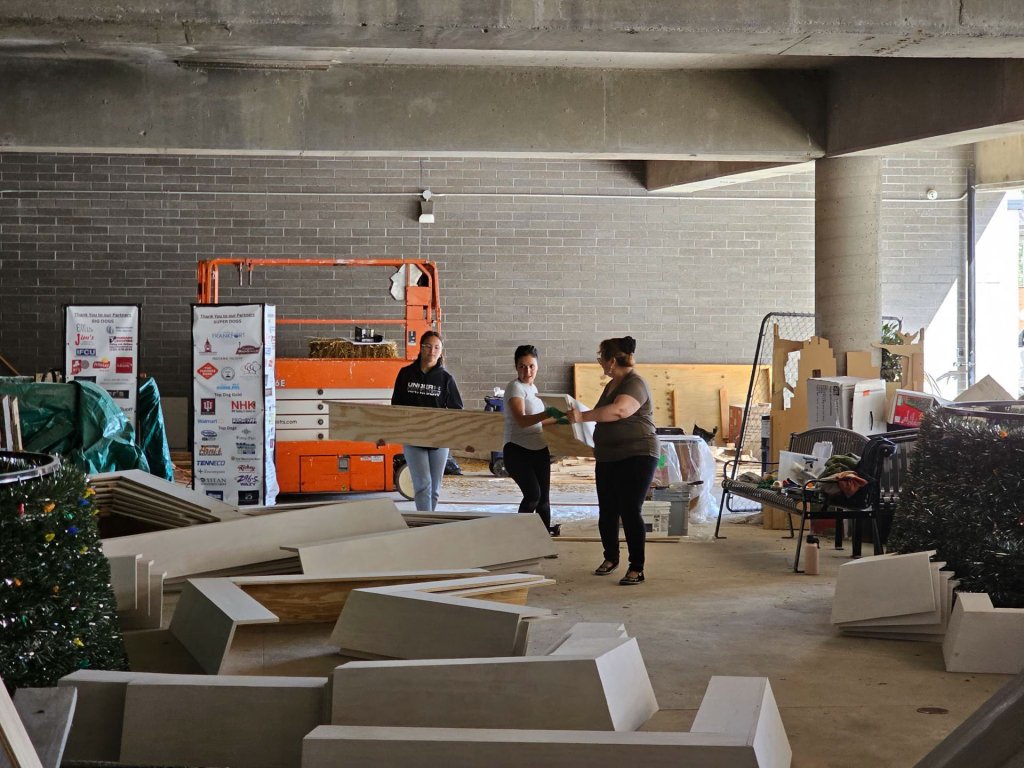
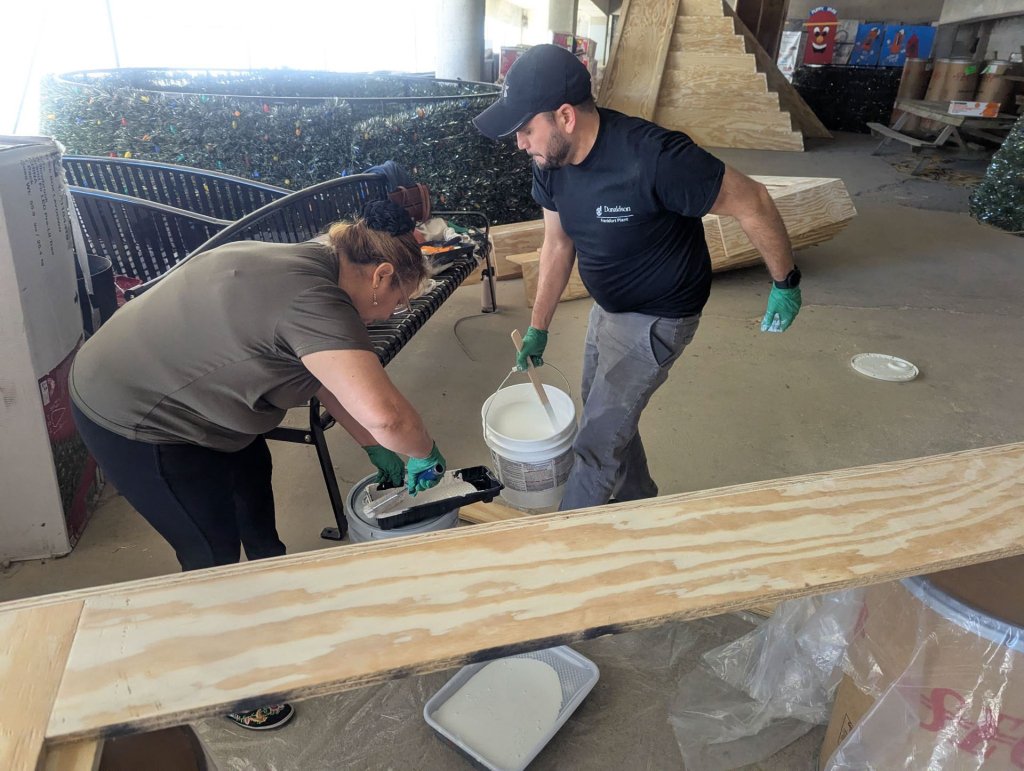
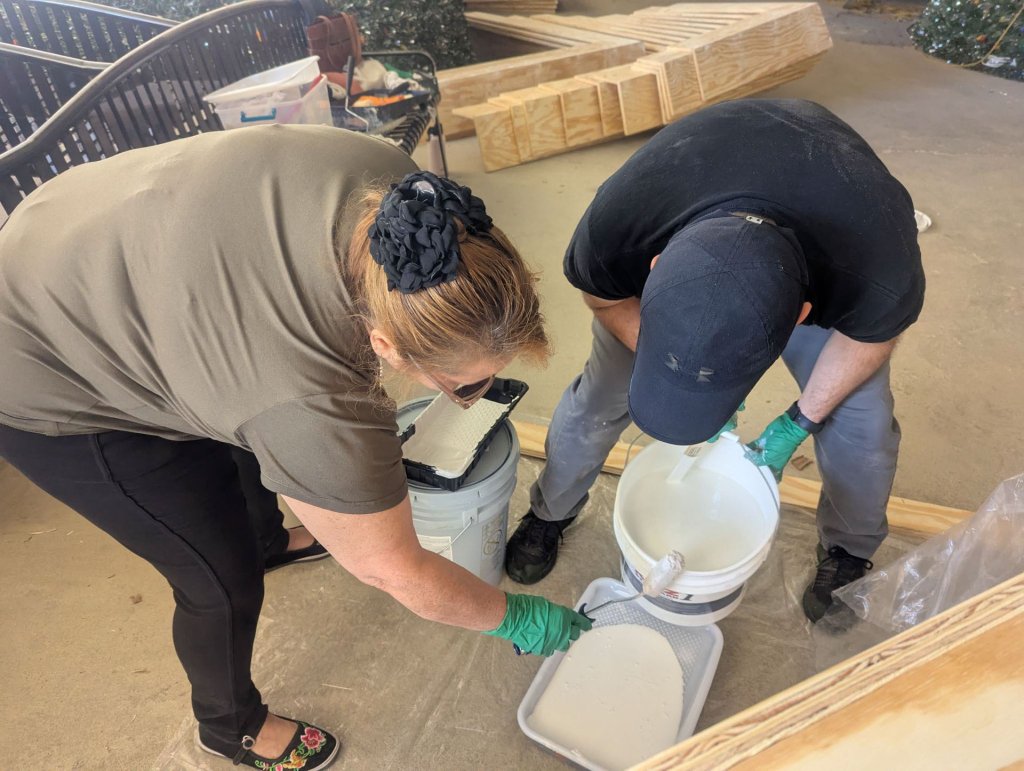
The following day, Ricardo and his brother Roy began working early in the morning, joined by Edgar Garcia-Hernandez in the evening. Together, the three of them did an amazing job with the paint. Marco arrived that same evening, dropping off the temple he had masterfully crafted.
We realized we needed more paint, so early the next morning I went to Sherwin Williams to purchase another gallon. Brandon, the store manager, graciously donated this extra gallon of paint and a couple of rollers we needed. I dropped them off at the storage room around 7:30 AM, where Ricardo was already diligently working on the pyramid. Later that day, I stopped by again and was impressed to see Ricardo and his brother Roy applying the finishing touches to the paint job; they had completed it so quickly and did an amazing job! As a small token of appreciation I went to purchase a Pizzabirria for them. While speaking with the owners of La Mixteca, they discovered the meal was for volunteers working on the pyramid and, once again, generously donated the food.
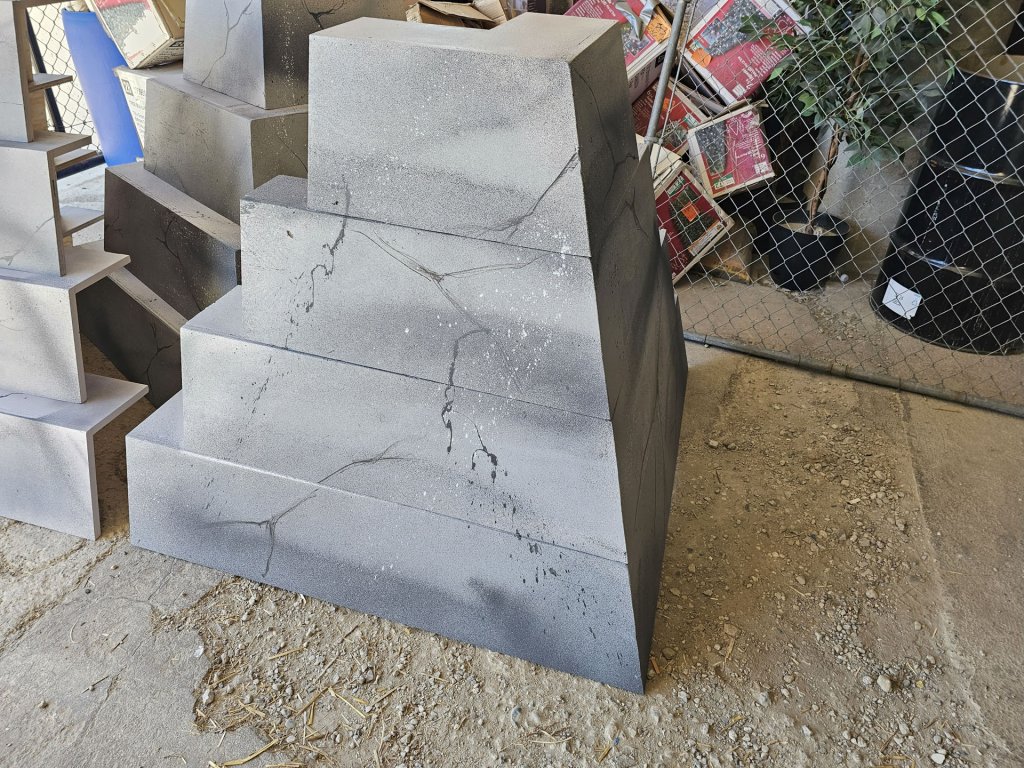
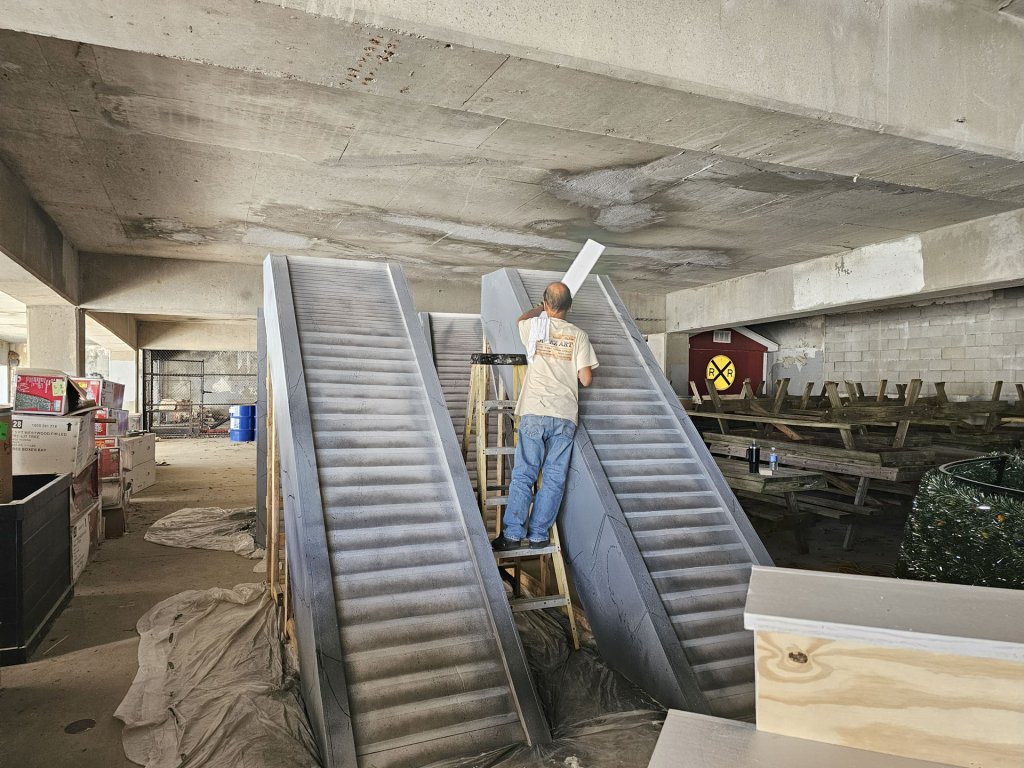
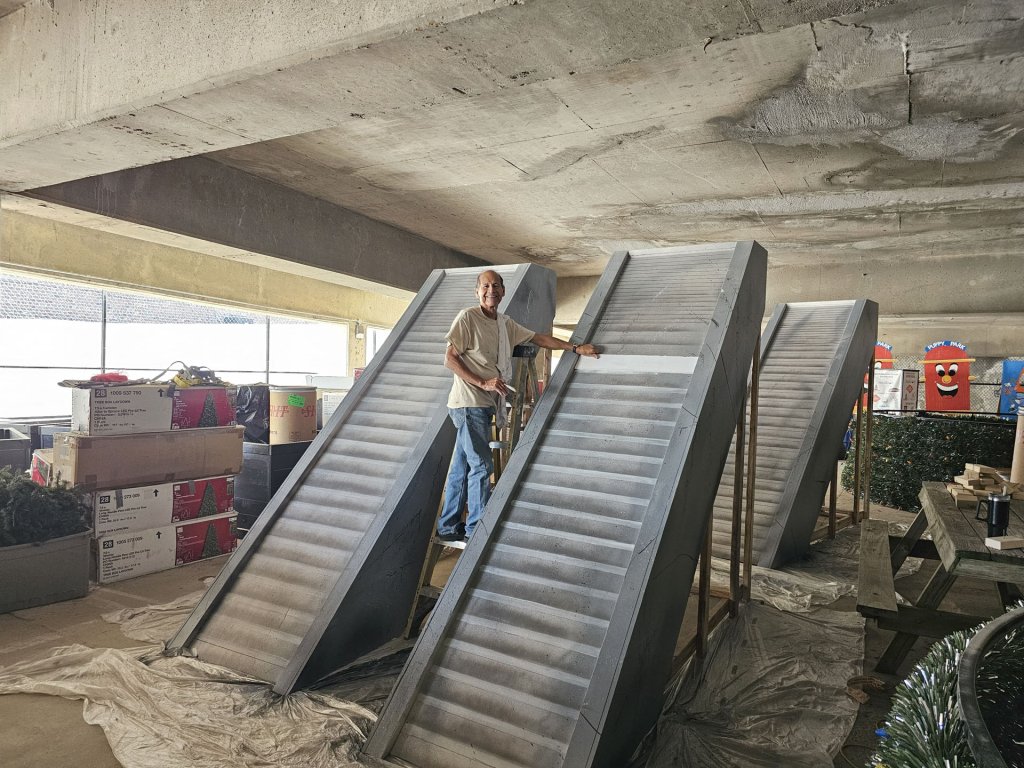
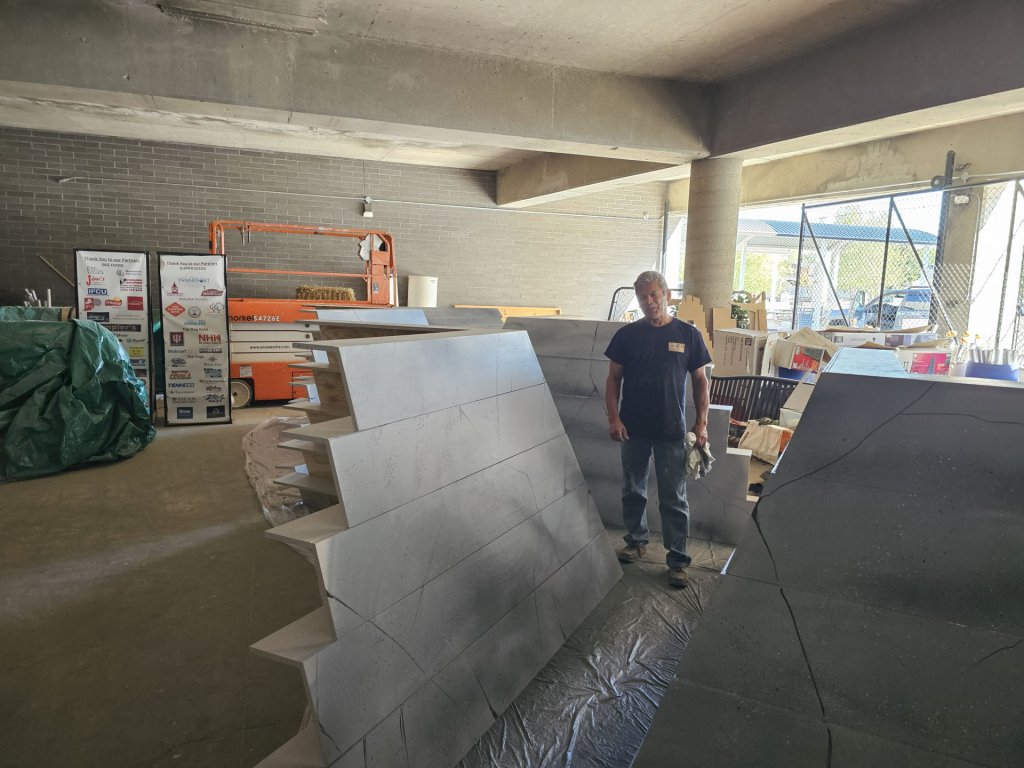
After all this dedicated work, the pyramid was finally completed and ready for the festival.
From the initial planning stages to the final touches, every step of this project was a testament to teamwork and dedication. The construction involved meticulous attention to detail, from replicating the iconic steps to ensuring the structural integrity of the model. We sometimes forget that Mexico and other South American countries boast an enigmatic history that continues to baffle researchers and archaeologists regarding the construction of cities and pyramids like those at Chichen Itza. The construction of this pyramid reminds us of the ingenuity of our ancestors and the resilience of our community, demonstrating that even in moments of uncertainty, we still come together to accomplish something amazing. Now more than ever, our community needs unity and to embrace each other, no matter where our roots are from. Let this monument be a reminder that we are a stronger community when we work together, when we appreciate each other’s cultures. Let’s make an effort to get to know each other and build a stronger foundation, so that, like the pyramids that stand strong through time, our community may thrive and grow even stronger.
Our Amazing Volunteers
From the bottom of my heart I thank every person whose hand helped bring this vision into a reality. Thank you to all the employees of the Frankfort Parks Department for your help transporting the pyramid. Thank you to all the sponsors of the Raíces Festival as your contribution also helped fund this project. Thank you to my wife Esmeralda and my parents and siblings for always being there for me. Thank you Jose, Hugo, Victor, and Leobardo for the hard work and time you invested in this project. Thank you Marco for sharing your craftsmanship, and time and thank you Ricardo, Roy and Edgar for the amazing artwork. Thank you Tornado Roofing, Sherwin Williams, Coomer, La Mixteca, and the City of Frankfort.
This project would not have been possible without each and every one of you. Your collective skills, enthusiasm, and tireless work transformed a vision into a tangible masterpiece. Whether you were involved in measuring, cutting, painting, organizing, or donating materials or money, your contributions were invaluable, and for that, we will forever be grateful.
A Lasting Impact
The scaled-down Chichen Itza pyramid is more than just a model; it’s a symbol of what can be achieved when a community comes together. It will serve as an educational tool and a source of inspiration for many to come, showcasing the wonders of ancient civilizations and the power of collaborative effort.
Thank You!
We are incredibly proud of what we’ve accomplished together.
Rafael Figueroa
Raices Festival Organizing Committee Member
